Arthroscopy uses a camera, sterile fluid and small access points to inspect a joint and treat selected damage, but the operation is not suitable for every MRI finding or every source of pain. By the end, you will understand the surgical sequence, how doctors decide whether it fits, what recovery involves and which hospital capabilities matter when comparing care in Thane.
Key takeaways
- Bring scans, medication lists, allergy details and blood-thinner information.
- Arthroscopy uses small portals, a camera and specialised instruments inside a joint.
- Treatment decisions depend on the joint problem, imaging, symptoms and nonsurgical options.
- Ask about anesthesia, same-day discharge, physiotherapy and warning signs before surgery.
What Happens During Arthroscopy Surgery, Step by Step
The arthroscopy surgery steps in Thane begin with a consultation, not the operation itself. Bring MRI or X-ray reports, medication and allergy lists, previous operation records, and details of blood-thinner use or major medical conditions.
1. The surgeon examines the joint, reviews imaging, identifies the suspected problem and discusses alternatives to surgery. You should hear the proposed repair, possible findings, restrictions, expected benefits and costs before consenting.
2. Preoperative clearance checks your medical fitness. Blood tests, an electrocardiogram or other assessments depend on your health and the planned procedure.
3. In the operating room, an anaesthetist gives regional or general anaesthesia and monitors your breathing, blood pressure, heart rate and oxygen level. The team cleans the skin with antiseptic and covers the area with sterile drapes.
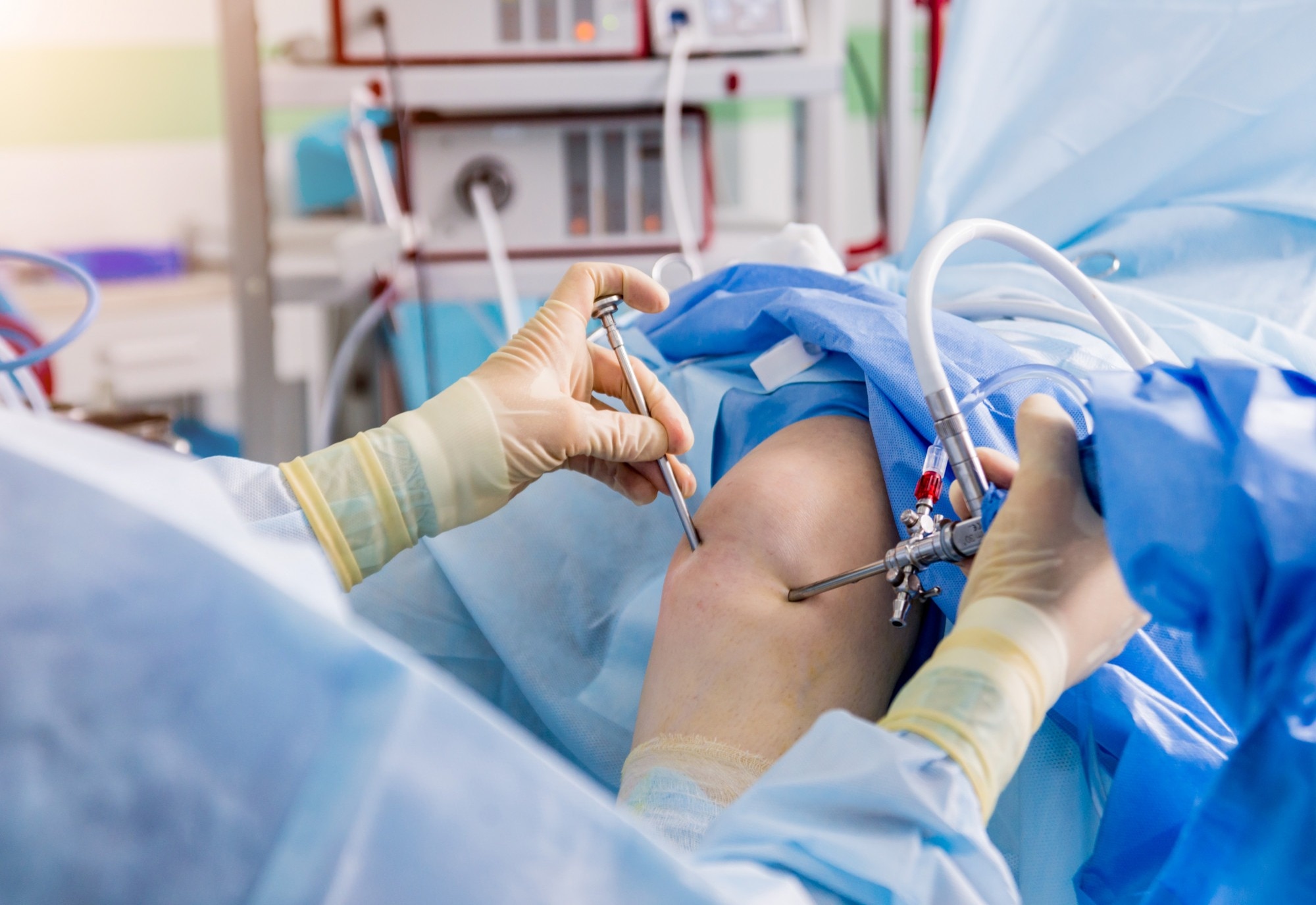
4. The surgeon makes small incisions called portals. One holds the arthroscope, a camera with a light source; another admits instruments. Sterile saline fills the joint, widening the space and carrying blood away for a clearer view.
5. The surgeon inspects the joint, then treats the finding. This may mean trimming a torn meniscus, repairing it, removing a loose body, smoothing cartilage or reconstructing a ligament.
6. After checking the repair, the surgeon removes the instruments, drains excess fluid and closes the portals with sutures, adhesive strips or dressings.
7. In recovery, staff monitor pain, nausea, circulation, movement, breathing and vital signs. Before discharge, you receive instructions for dressings, bathing, ice, elevation, exercises, medicines, crutches and follow-up.
How Arthroscopy Changes Across the Knee, Shoulder and Other Joints
The joint determines the portals, patient position, instruments and repair. A camera enters through one small incision, while sterile saline expands the joint and separate portals allow instruments to trim, remove, stitch or reconstruct damaged tissue.
| Joint | Problems addressed | What changes |
|---|---|---|
| Knee | Meniscus tears, anterior cruciate ligament injury, cartilage damage, loose bodies and inflamed synovium | Meniscus trimming usually permits earlier loading; meniscus repair protects the stitches with crutches and restricted weight-bearing. ACL reconstruction adds bone tunnels, a graft and months of rehabilitation. |
| Shoulder | Rotator cuff tears, labral tears, loose bodies, inflamed tissue and impingement | The surgeon may anchor a tendon or labrum to bone. That repair often requires a sling and limits shoulder movement while it heals. |
| Hip | Labral tears, cartilage injury, femoroacetabular impingement and loose bodies | Longer instruments and traction create working space around the deep joint. Crutches and limited loading are common after labral repair or reshaping. |
| Ankle | Cartilage defects, loose bodies, scar tissue and persistent inflammation | The smaller joint requires precise portals; treatment may involve removing loose fragments or addressing a focal cartilage lesion. |
| Wrist or elbow | Ligament or triangular fibrocartilage complex tears, cartilage damage, loose bodies and inflammation | The surgeon uses narrower instruments, and splinting or movement restrictions depend on the structure repaired. |
The repair itself changes recovery more than the word arthroscopy does. Removing a loose body or trimming unstable tissue differs from stitching a meniscus, fixing a labrum or reconstructing a ligament, so your surgeon should give operation-specific weight-bearing, splint, physiotherapy and return-to-activity instructions.
How Doctors Decide Whether Arthroscopy Is the Right Treatment
Arthroscopy is most useful when symptoms point to a problem inside the joint that the camera can treat. Repeated locking, catching, instability, a painful meniscal tear or a loose fragment support that possibility. Diffuse aching from knee osteoarthritis alone does not: lavage or debridement usually offers little clinically important benefit in degenerative disease.
The examination tests range of motion, swelling, tenderness and joint stability. X-rays show arthritis, fractures and alignment; MRI can reveal meniscus, ligament and cartilage abnormalities. An abnormal MRI does not prove that arthroscopy will relieve your pain, because symptoms can also come from muscle weakness, referred pain or changes the operation cannot correct.
At an arthroscopy consultation in Thane, ask how your findings affect the decision:
- Diagnostic arthroscopy fits an uncertain intra-articular diagnosis when examination and imaging leave an important question that will change treatment.
- Therapeutic arthroscopy fits a defined, treatable problem such as a displaced meniscus tear, loose body or selected ligament injury.
- Nonoperative care comes first when physiotherapy, activity changes, medicines or injections remain reasonable alternatives.
- A second opinion makes sense when the proposed operation is elective, the diagnosis is unclear or the expected benefit is modest.
Bring MRI and X-ray images with reports, medication and allergy lists, operation records, anticoagulant details and major medical conditions. Before consenting, confirm the exact procedure, alternatives, restrictions, costs and what happens if the surgeon finds different damage. A meniscal repair or ligament reconstruction also demands a longer rehabilitation plan than simple inspection or trimming.
Anesthesia, Discharge and Recovery After Arthroscopy
Fasting instructions, medication changes and allergies are checked before anesthesia. An anesthetist places an intravenous line, attaches monitors for oxygen level, blood pressure and heart rhythm, and explains the planned technique.
You may receive general anesthesia, which makes you unconscious, or regional anesthesia and a nerve block, which numbs the limb and reduces pain after surgery.
Afterward, expect grogginess, thirst, nausea or temporary numbness. Do not stand until staff confirm that your strength and sensation have returned. Pain, swelling and stiffness are common; use the prescribed analgesic, ice and elevation as instructed.
| Operation | Early weight-bearing | Rehabilitation focus |
|---|---|---|
| Diagnostic arthroscopy or meniscus trimming | Often weight-bearing as tolerated with support | Range of motion, swelling control and gradual strengthening |
| Meniscus repair | Crutches with restricted loading for the period prescribed | Protecting the repair before progressing movement and strength |
| ACL reconstruction | Crutches and staged loading according to graft and surgeon’s protocol | Physiotherapy for motion, quadriceps control, balance and return to sport |
Shoulder procedures often require a sling and delayed active lifting, while hip, ankle, wrist and elbow operations have different movement limits. Your discharge plan must name the operation, permitted loading, exercises, dressing and bathing rules, and follow-up date.
Many patients leave the same day, but discharge depends on the procedure, anesthesia, medical history and safe mobility. Arrange an adult escort; do not drive after anesthesia or while taking opioid pain medicine.
Seek urgent advice for fever, worsening redness, pus, uncontrolled pain, calf swelling, chest pain, breathing difficulty or a cold, pale or numb limb.
How to Compare Arthroscopy Care in Thane
A hospital’s operating room is only one part of safe arthroscopy care. Compare whether the knee arthroscopy hospital in Thane has imaging, laboratory testing, anesthesia, recovery monitoring, sterile facilities, physiotherapy, postoperative review and a clear route for urgent complications.
| Option | What to check | Why it matters |
|---|---|---|
| Hospital facilities | X-ray or MRI access, preoperative tests, monitored recovery and emergency support | A problem discovered after discharge needs a defined response |
| Orthopedic team | Diagnosis, examination, imaging review and experience with the proposed repair | An abnormal MRI alone does not prove that surgery will relieve pain |
| Recovery plan | Weight-bearing limits, crutches, physiotherapy and return-to-work or sport milestones | Meniscal trimming may recover sooner than meniscal repair or ligament reconstruction |
| Consultation | Alternatives, benefits, restrictions, costs and what happens if findings change the plan | You need consent for a real surgical decision, not a generic procedure |
Do not select a team because a listing promises the “best orthopedics in Thane arthroscopy surgery procedure.” Ask whether your symptoms indicate a treatable meniscus, ligament, cartilage or loose-body problem; routine arthroscopy rarely provides important benefit for osteoarthritis alone.
Take your X-ray or MRI reports and images, medication and allergy lists, previous operation records, anticoagulant details and major medical conditions. At Highland Hospital Thane, use the consultation to confirm who reviews these records, who manages anesthesia and how postoperative concerns are handled.
Plan an adult escort home. Do not drive after anesthesia or while taking opioid pain medicine.
Related service
Orthopedics Dr. Babasaheb Chavan, a renowned orthopedic specialist at Highland Hospital, Thane, offers advanced arthroscopy surgery for patients with... View service → |
Frequently asked questions
What happens during arthroscopy surgery?
After consultation and anesthesia, the surgeon makes small portals, inserts a camera, examines the joint and uses instruments to treat the identified problem.
How does arthroscopy differ between the knee and shoulder?
The portals, patient positioning, instruments and rehabilitation plan change according to the joint and the condition being treated.
How do doctors decide whether arthroscopy is appropriate?
They consider your symptoms, physical examination, MRI or X-ray findings, diagnosis, response to nonsurgical treatment and expected surgical benefits.
How long is recovery after arthroscopy?
Recovery depends on the joint, procedure and tissue repair. Ask when you can bear weight, drive, work, exercise and begin physiotherapy.
What should you compare when choosing arthroscopy care in Thane?
Compare the surgeon’s relevant joint expertise, diagnostic review, anesthesia plan, hospital facilities, discharge instructions, physiotherapy support and follow-up access.
Keywords