Breathing difficulty, uncontrolled bleeding, a swallowed object or sudden hearing loss needs a different response from routine ear, nose and throat symptoms. You will learn how to identify danger, give safe first aid, judge a hospital’s emergency capability and decide what information to confirm before travelling for care.
Key takeaways
- Call emergency services for stridor, choking, blue lips, or inability to swallow saliva.
- Keep the person upright and avoid food, drink, or objects in the throat.
- Check whether the hospital has 24-hour ENT, airway, bleeding, and imaging support.
- Confirm weekend access, specialist availability, emergency fees, and transfer arrangements.
Which ENT symptoms require emergency department care?
Breathing and swallowing decide the urgency. Stridor, choking, blue lips, rapidly increasing throat or neck swelling, drooling, inability to swallow saliva or a muffled voice require emergency ear nose throat care immediately. Do not wait for a routine appointment.
- Nosebleeding that will not stop with firm pressure, recurs repeatedly, comes from both nostrils or runs into the throat may be posterior bleeding and needs hospital assessment.
- A button battery in the ear or nose, or any object affecting the airway, needs immediate removal with proper instruments; repeated blind attempts can push it deeper.
- Severe injury to the nose, orbit, jaw or skull base needs emergency assessment for head, eye, neck and cranial-nerve damage.
- Sudden hearing loss within 72 hours, especially with dizziness, facial weakness, severe headache or other neurological symptoms, needs same-day urgent assessment.
| Problem | Emergency department | Routine ENT appointment |
|---|---|---|
| Breathing or swallowing | Airway difficulty, choking, saliva pooling | Mild sore throat while breathing normally |
| Bleeding | Persistent, heavy or throat-flowing blood | Brief nosebleed that has stopped |
| Foreign body | Button battery, airway object or embedded item | Stable wax or a blocked ear |
| Hearing | Sudden loss or neurological symptoms | Gradual hearing reduction |
The best healthcare services for emergency ENT care in Thane should provide airway assessment, suction, oxygen and specialist backup—not merely a quick examination.
What should you do before reaching emergency care?
Call emergency services immediately for severe breathing difficulty, blue lips, choking, rapidly increasing throat or neck swelling, drooling, or inability to swallow saliva. Keep the person upright and still; loosen tight clothing, remove visible dentures, and use suction only if trained.
Do not put fingers or objects into the mouth, and do not give food, drink, or tablets because urgent airway treatment or anaesthesia may be needed.
1. For a nosebleed, sit upright, lean forward, and pinch the soft part of the nose continuously for 10–15 minutes. Spit out blood rather than swallowing it. Do not tilt the head back, lie flat, blow the nose, or pack it with tissue.
2. Leave objects embedded in the ear, nose, throat, eye, or face in place. Do not use cotton buds, tweezers, oil, or repeated blind attempts. A button battery needs immediate hospital assessment; keep the person upright and take the battery packaging if available.
3. After facial trauma, support the head and neck, avoid straightening the nose or jaw, and apply a wrapped cold pack without pressing an injured eye. Cover an open wound with clean gauze.
Arrange rapid transport to emergency ear nose throat care, and take a medication list, especially anticoagulants.
How should a hospital respond to airway, bleeding and infection risks?
A hospital providing emergency ENT treatment in Thane should begin with airway and breathing assessment, not a delayed specialist examination. Stridor, drooling, muffled voice, cyanosis, rapidly worsening throat or neck swelling, or inability to swallow secretions require immediate resuscitation.
- A resuscitation area with oxygen, suction, monitoring and airway equipment, plus rapid access to anaesthesia, critical care and surgical backup.
- Bleeding control beyond cotton packing: blood-pressure assessment, medication and anticoagulant review, nasal suction, topical vasoconstriction, cautery, packing and operative or endoscopic control when needed.
- Deep-neck infection management with blood tests, intravenous medicines, contrast CT when appropriate, operating-room access and ICU monitoring or transfer. Swelling can obstruct the airway and spread toward the chest.
- Coordinated assessment of facial trauma, including the eyes, jaw, skull base, cranial nerves and cervical spine, with access to maxillofacial surgery, ophthalmology and neurosurgery.
CT helps assess facial trauma, deep infection and suspected foreign bodies, but imaging must not delay airway treatment in an unstable patient. The hospital should also document whether you need discharge follow-up, observation, admission or transfer when paediatric ENT, endoscopy, ICU or operative care is unavailable.
What tests and treatments are part of urgent ENT care?
After airway and circulation are stable, the team matches testing to the suspected injury or disease. Imaging must not delay resuscitation, oxygen or airway control.
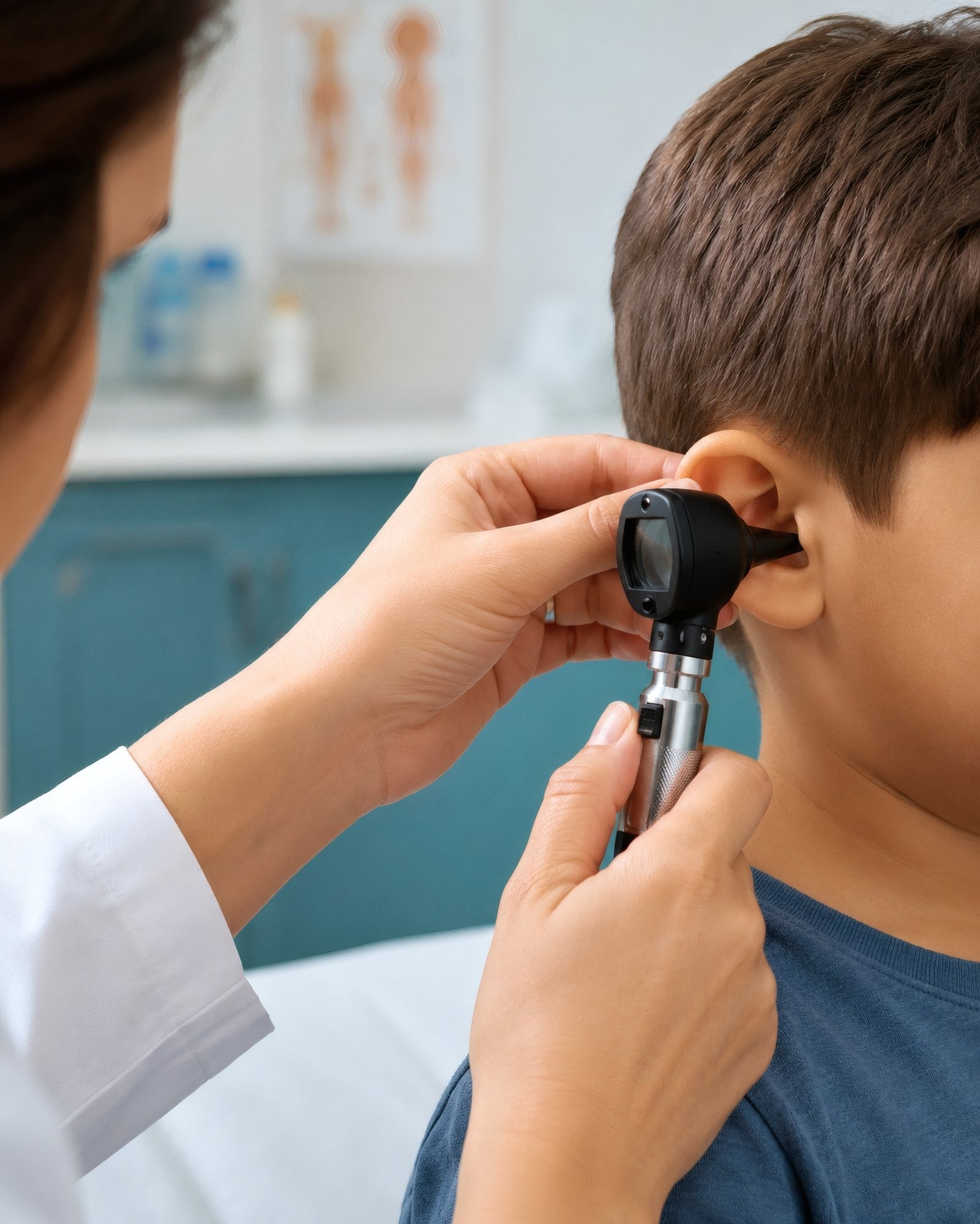
- Sudden hearing loss: The clinician examines the canal and eardrum, removes wax or a visible obstruction when safe, and arranges hearing assessment or audiometry. A loss of at least 30 dB across three consecutive frequencies within 72 hours suggests sudden sensorineural hearing loss, which needs prompt specialist review and corticosteroid discussion. Neurological findings require further imaging or referral.
- Foreign body: The team identifies its location, checks for bleeding or perforation, and removes it with suitable instruments. A deeply embedded object, a battery, or an uncooperative child may require sedation, endoscopy or an operating room. Repeated blind attempts can push it deeper.
- Facial trauma: Examination covers the nose, orbit, jaw, skull base, eyes, pupils and cranial nerves. CT is selected for suspected fractures or retained fragments, with maxillofacial, ophthalmology or neurosurgical support when needed.
- Deep infection: Blood tests help assess significant infection or bleeding, while CT of the neck or sinuses defines swelling, an abscess or spread. Treatment can include intravenous antibiotics, drainage and admission.
A complete urgent ent consultation in thane ends with documented follow-up, observation, admission or transfer. Emergency ent treatment in thane should include referral when paediatric ENT, endoscopy, anaesthesia, intensive care or surgery is unavailable.
How do you compare emergency ENT services in Thane?
A complete service does more than provide an ENT examination. It starts with airway triage, has resuscitation equipment ready, brings in the right specialist, and decides whether you need discharge, observation, admission or surgery.
| Service feature | Basic clinic visit | Complete emergency ENT care |
|---|---|---|
| Staffing | ENT clinician during consultation hours | Emergency physician, trained nurses, ENT specialist access, and anaesthesia or critical-care backup |
| Equipment | Otoscope, examination light and basic instruments | Oxygen, suction, airway equipment, endoscope, foreign-body instruments, cautery, packing supplies and monitoring |
| Specialist access | Referral after assessment | Immediate coordination with ENT, emergency medicine, anaesthesia, radiology, ophthalmology, maxillofacial surgery or neurosurgery |
| Disposition | Return home after temporary treatment | Observation, posterior nosebleed packing, admission, operative control, imaging or monitored transfer |
Ask how the service handles stridor, drooling, uncontrolled bleeding, button batteries and airway foreign bodies. Repeated blind removal attempts are unsafe; the service needs suitable illumination, suction and endoscopic removal capability.
For sudden hearing loss, ask whether hearing assessment and neurological review are available rather than assuming wax. The best healthcare services for emergency ENT care in Thane also provide CT access for facial trauma and a documented handoff if admission or transfer is required.
That is emergency ear nose throat care, not simply a convenient clinic appointment.
What should you confirm before choosing a facility at night or on a weekend?
At night or on a weekend, verify by phone before travelling: ask whether the emergency department accepts walk-ins, whether an ENT doctor can provide an urgent ENT consultation in Thane now, and whether the team handles your exact problem. Give the patient’s age, symptoms, onset and severity.
When calling Highland Hospital Thane, ask who will assess the patient on arrival and where to report.
| Question to verify | Adequate answer | Warning sign |
|---|---|---|
| Walk-in access | The emergency department accepts unscheduled patients 24/7 and gives immediate triage | Appointment required before assessment |
| Airway problem | Oxygen, suction, airway equipment, anaesthesia and critical-care backup are available | The facility advises waiting for an outpatient appointment |
| Persistent nosebleed | Staff can check vital signs and medicines, cauterise or pack the nose, and arrange operative control | Only cotton packing is offered |
| Foreign body | Clinicians have proper illumination, suction and instruments; airway objects go for urgent endoscopic removal | Repeated blind removal attempts are suggested |
| Sudden hearing loss | The facility can assess the ear, hearing and neurological signs, then arrange imaging or referral | A normal-looking ear ends the evaluation |
Ask how the facility handles admission, observation or transfer if it lacks paediatric ENT, endoscopy, ICU or surgery. For severe breathing difficulty or choking, call 112 while arranging emergency transport.
Related service
Otorhinolaryngologist Dr. Seema Gupta at Highland Hospital, Thane, provides comprehensive Emergency ENT (Ear, Nose, and Throat) services for patients requiring urgent... View service → |
Frequently asked questions
Which ENT symptoms require emergency department care?
Go immediately for stridor, choking, blue lips, rapidly increasing throat or neck swelling, drooling, inability to swallow saliva, or a muffled voice.
What should you do before reaching emergency care?
Keep the person upright, avoid food and drink when swallowing is unsafe, do not probe the throat, and call emergency services if breathing worsens.
How should a hospital respond to airway, bleeding and infection risks?
The team should assess breathing first, provide oxygen and airway support, control bleeding, start infection treatment when indicated, and involve ENT or anaesthesia specialists.
What tests and treatments are part of urgent ENT care?
Care can include throat and ear examination, flexible nasendoscopy, oxygen monitoring, blood tests, X-rays or CT scans, suction, bleeding control, antibiotics, drainage, or emergency surgery.
How do you compare emergency ENT services in Thane?
Compare 24-hour emergency access, ENT specialist coverage, airway and bleeding capability, imaging, operating-room access, paediatric support, and safe transfer arrangements.
Keywords