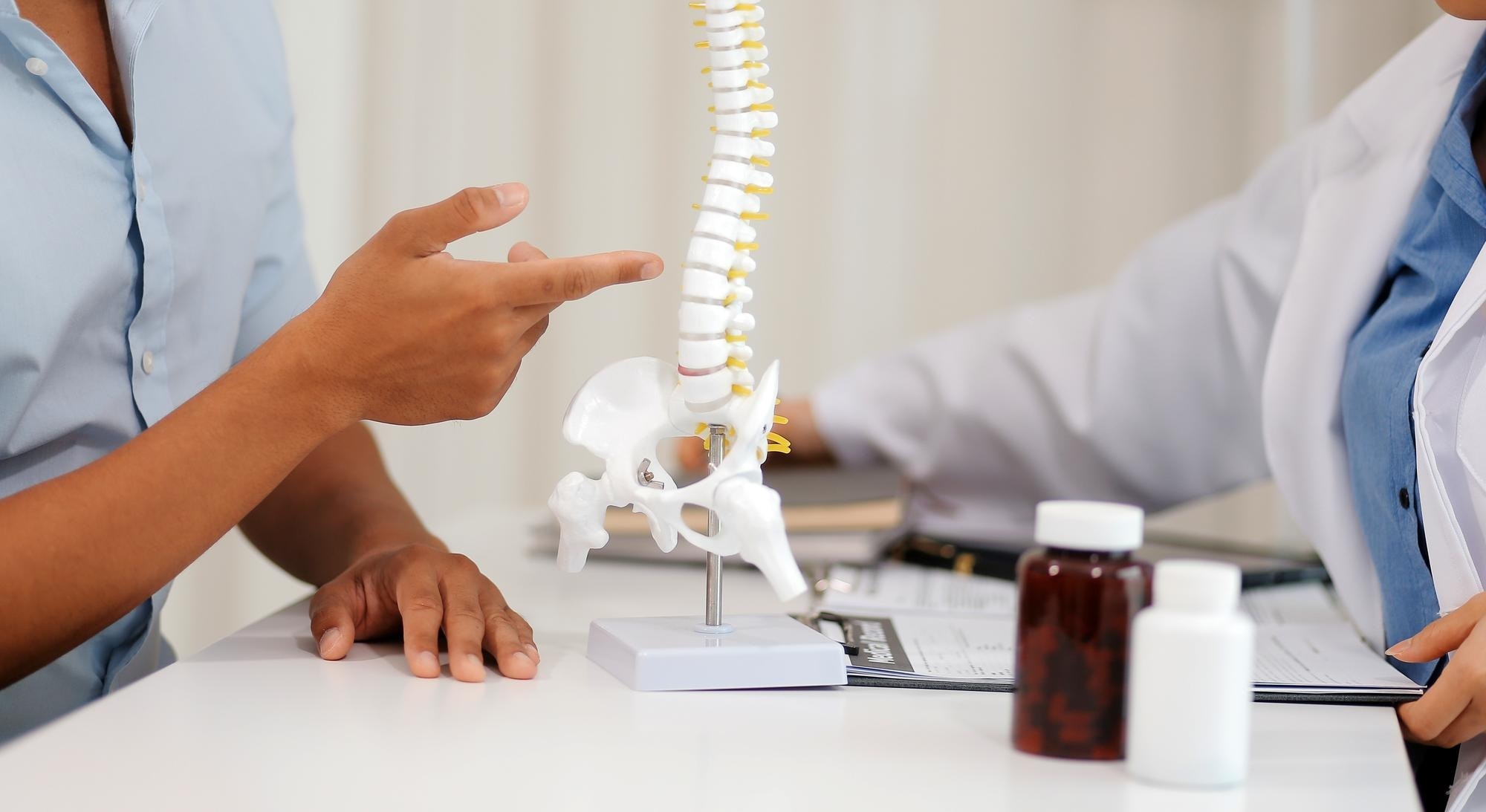
Degenerative spine treatment is worth pursuing when pain, weakness, reduced walking ability, or loss of function matches a treatable spinal problem—not merely because an MRI shows wear. You will be able to judge urgency, compare conservative care with injections or surgery, and assess whether a hospital’s capabilities justify your choice.
Key takeaways
- Treat MRI findings only when they match symptoms, examination, and functional loss.
- Seek emergency assessment for new bladder or bowel loss, saddle numbness, or progressive weakness.
- Try structured nonsurgical care before surgery when no urgent nerve damage exists.
- Compare hospitals by spine expertise, imaging review, rehabilitation, and emergency support.
Which Degenerative Spine Problems Actually Need Treatment?
An MRI finding needs treatment only when it matches your symptoms, examination, and loss of function. Degenerative spine disease includes cervical and lumbar spondylosis, degenerative disc disease, facet-joint arthritis, spinal stenosis, spondylolisthesis, and nerve compression.
| Finding | What it may mean | When it deserves active assessment |
|---|---|---|
| Disc degeneration, bulge, or protrusion | Common age-related changes that can exist without pain | When they match persistent pain, numbness, weakness, or reduced function |
| Facet-joint arthritis | Wear in the small joints behind the spine, often linked with local neck or back pain | When pain remains limiting after appropriate nonsurgical care |
| Spinal stenosis | Narrowing around spinal nerves or the spinal cord | When leg pain, reduced walking distance, balance problems, or arm and hand symptoms develop |
| Spondylolisthesis | One vertebra has shifted relative to another, sometimes causing instability or nerve pressure | When standing, walking, neurological function, or spinal alignment is affected |
| Nerve compression | A disc, bone spur, or narrowed canal irritates a nerve | When radiating arm or leg pain, tingling, numbness, or weakness matches the scan |
A disc bulge or protrusion alone does not prove that it causes pain. Axial neck or back pain alone does not automatically justify surgery, particularly when there is no neurological deficit. Persistent symptoms that disrupt work, sleep, walking, or daily activities deserve assessment and a clear plan for degenerative spine care options.
The same principle applies when considering degenerative spine treatment in Thane: treat the functional problem, not the MRI report.
Which Symptoms Need Routine Care and Which Need Emergency Assessment?
Axial neck or back pain usually comes from discs, facet joints, muscles, or ligaments and needs routine assessment unless severe or rapidly worsening. Sciatica reflects lumbar nerve irritation and causes radiating leg pain, tingling, numbness, or weakness; cervical nerve compression can send pain or altered sensation into an arm or hand.
| Symptom pattern | Likely source | Urgency |
|---|---|---|
| Neck or back pain without neurological change | Discs, facet joints, muscles | Routine appointment |
| Leg pain, tingling, numbness, or weakness | Lumbar nerve irritation (sciatica) | Prompt assessment; emergency if rapidly worsening |
| Arm pain, hand tingling, or numbness | Cervical nerve compression | Prompt assessment if persistent or progressive |
| Reduced walking distance or leg heaviness | Lumbar spinal stenosis | Routine or prompt specialist review |
| Worsening balance, gait, hand clumsiness, or limb weakness | Possible degenerative cervical myelopathy affecting the spinal cord | Prompt specialist assessment |
Do not wait for routine degenerative spine treatment in Thane if you develop new urinary retention or incontinence, loss of bowel control, saddle-area numbness, rapidly progressive weakness, or inability to walk. Go to an emergency department immediately; these signs can indicate severe nerve or spinal-cord compression.
A spine specialist hospital in Thane should assess worsening hand function, balance, gait, or strength promptly, even without bladder symptoms.
How Do Doctors Decide Whether Treatment Is Worthwhile?
Treatment is worthwhile only when symptoms, examination findings, and a plausible pain or nerve source align. At a multispeciality spine hospital in Thane, doctors weigh severity, duration, functional limits, comorbidities, and failed conservative care before choosing among degenerative spine care options; an abnormal MRI alone does not justify an operation.
A neurological examination checks:
- Muscle strength for weakness in specific arm or leg movements.
- Reflexes for reduced nerve-root function or spinal-cord involvement.
- Sensation for numbness or altered response to touch and pinprick.
- Gait for limping, foot weakness, or difficulty walking.
- Balance for instability linked to cord or nerve dysfunction.
- Functional assessment for effects on work, sleep, lifting, dressing, stairs, and daily activities.
Request imaging for progressive neurological deficits, suspected serious disease, or persistent symptoms when results could change treatment. X-rays assess alignment and instability; MRI shows discs, nerves, and the spinal cord; CT defines bone detail. Electromyography or nerve-conduction studies help when the source of limb symptoms is uncertain.
What Are the Real Trade-Offs Between Nonsurgical Care and Surgery?
The lower-risk route takes work, not weeks of rest: stay active, attend exercise-based physiotherapy, practise prescribed home exercises, improve posture and lifting technique, manage weight, and attend follow-up. Oral medicines can irritate the stomach, affect kidneys, raise blood pressure, or cause drowsiness; topical medicines may irritate skin. Review doses and interactions, especially with blood thinners.
| Option | What it involves | Realistic trade-off |
|---|---|---|
| Non-operative care | Activity, physiotherapy, home exercise, medicines, weight management and follow-up | No incision, but progress often takes weeks; pain may persist |
| Lumbar decompression | Removes material or bone compressing a matching nerve | Faster relief of leg pain or weakness is possible, but operative risks and persistent pain remain |
| Fusion | Decompression plus implants joining spinal segments | Adds blood loss, infection risk, adjacent-segment stress and longer recovery |
An epidural steroid injection can provide short-term relief for selected radicular pain, buying time for rehabilitation; it does not reverse degeneration or cure ordinary axial back pain. Lumbar decompression is defensible when imaging matches nerve compression, leg pain or neurological symptoms are present, and non-operative care has not provided adequate relief.
Fusion is reserved for instability, deformity, or selected recurrent disease—not an abnormal MRI alone.
- Diabetes can impair healing; obesity increases wound and clot risk; smoking slows bone healing.
- Osteoporosis can weaken fixation, while blood thinners require a documented medication plan.
- Heart or lung disease can increase anaesthetic risk.
Recovery ranges from gradual improvement over weeks with conservative care to months after surgery and rehabilitation. These are central degenerative spine care options when weighing degenerative spine treatment in Thane.
How Should You Compare a Multispeciality Spine Hospital in Thane?
The phrase “best multispeciality hospital degenerative spine treatment in thane” is not a clinical category or promise of a better result.
For a spine specialist hospital in Thane, compare coordinated capability with your actual problem, not the label: wider support matters most when diagnosis is uncertain, neurological symptoms are urgent, or diabetes, heart disease, lung disease, obesity, smoking, osteoporosis, or blood thinners increase risk.
- Confirm specialist MRI review, neurological emergency assessment, physiotherapy, pain management, appropriate decompression and fusion, anaesthetic and intensive-care backup, infection and complication monitoring, blood-management protocols, inpatient rehabilitation, and follow-up for complications.
- Check the surgeon’s relevant training and ask what benefit is expected for pain, weakness, and walking capacity. Ask about alternatives, recovery restrictions, the chance of no improvement, and whether an independent second opinion is available.
- Treat NABH accreditation as evidence of organised systems, not an outcome guarantee. Before major surgery for pain without neurological deficit, obtain an independent second opinion.
| Question | Satisfactory answer | Warning sign |
|---|---|---|
| Why surgery? | Symptoms, examination, and MRI match | MRI abnormality alone |
| What is the fallback? | Named non-operative plan and review date | No alternative discussed |
| Who manages risk? | Anaesthesia, ICU, blood, infection, and rehabilitation pathways | Referral only after a complication |
Highland Hospital Thane can be used locally to ask these questions across coordinated specialist services; its availability does not prove that treatment or surgery is necessary.
Related service
Neurosurgery At Highland Hospital, Thane, under the expert care of Dr. Chandranath Tiwari, leading Neurosurgeon, we provide advanced and comprehensive treatment... View service → |
Frequently asked questions
Which degenerative spine problems actually need treatment?
Treatment is usually considered when cervical or lumbar spondylosis, disc disease, facet arthritis, spinal stenosis, spondylolisthesis, or nerve compression causes persistent pain, weakness, numbness, or reduced function. An MRI finding alone does not establish a need for treatment.
Which spine symptoms need emergency assessment?
Seek emergency assessment for new loss of bladder or bowel control, numbness around the genitals or inner thighs, rapidly worsening leg or arm weakness, difficulty walking, or severe pain after significant trauma.
How do doctors decide whether degenerative spine treatment is worthwhile?
Doctors compare your symptoms and physical examination with imaging findings, duration, functional limitations, previous treatment, general health, and nerve involvement. They weigh expected benefit against complications, recovery time, and the chance that pain has another source.
What are the trade-offs between nonsurgical care and spine surgery?
Nonsurgical care avoids surgical risks but may require weeks of exercise, medicines, activity changes, and follow-up. Surgery can relieve specific nerve compression or stabilize an unstable spine, but it involves anaesthesia, recovery, complications, and no guarantee of complete pain relief.
How should you compare a multispeciality spine hospital in Thane?
Check whether the hospital offers spine-specialist assessment, timely MRI or CT review, pain and rehabilitation services, neurology or neurosurgery support, anaesthesia, emergency care, and clear follow-up planning. Ask who will coordinate care if your diagnosis is uncertain or surgery is not appropriate.
Keywords